Introduction
The electric guitar stands as perhaps the most revolutionary musical instrument of the 20th century, fundamentally transforming not just how we make music, but how we experience it. From its humble beginnings in the 1930s to its explosive popularity in the 1950s and beyond, the electric guitar has continuously evolved, adapting to new technologies, musical styles, and cultural movements.
This comprehensive journey through nine decades of electric guitar evolution reveals how a simple concept – amplifying a guitar’s sound – sparked a musical revolution that continues to shape popular culture today. Whether you’re a seasoned player exploring the best electric guitars or a music enthusiast curious about this iconic instrument’s development, understanding this evolution helps us appreciate not only where we’ve been, but where the electric guitar might be heading in our digital age.
The electric guitar stands as perhaps the most revolutionary musical instrument of the 20th century, fundamentally transforming not just how we make music, but how we experience it. From its humble beginnings in the 1930s to its explosive popularity in the 1950s and beyond, the electric guitar has continuously evolved, adapting to new technologies, musical styles, and cultural movements.
This comprehensive journey through nine decades of electric guitar evolution reveals how a simple concept – amplifying a guitar’s sound – sparked a musical revolution that continues to shape popular culture today. Whether you’re a seasoned player exploring the best electric guitars or a music enthusiast curious about this iconic instrument’s development, understanding this evolution helps us appreciate not only where we’ve been, but where the electric guitar might be heading in our digital age.
Table of Contents
- The Earliest Pioneers: 1930s-1940s Innovation
- The Foundation Years: 1950s Revolution
- The British Invasion: 1960s Expansion
- The Heavy Era: 1970s Power and Complexity
- The MTV Generation: 1980s Technology and Style
- Alternative Innovations: 1990s Diversity
- Digital Revolution: 2000s Modeling and Connectivity
- Modern Innovations: 2010s Hybrid Technologies
- Contemporary Trends: 2020s and Beyond
- Looking Forward: The Future of Electric Guitar
- Conclusion – A living, evolving instrument
The Earliest Pioneers: 1930s-1940s Innovation
Before the electric guitar became the icon we know today, visionary inventors and musicians were already experimenting with amplified string instruments in the 1930s. These early pioneers laid the groundwork for everything that would follow, though their names are often overshadowed by the more famous developments of the 1950s.
George Beauchamp and the Revolutionary “Frying Pan” (1931)
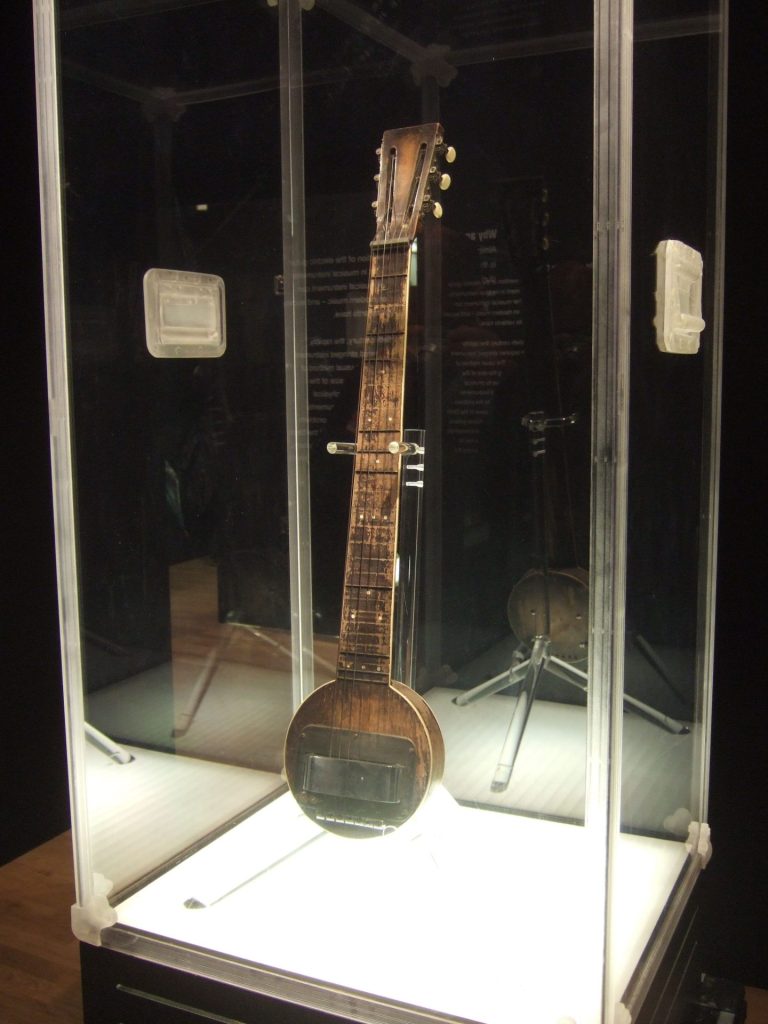
The electric guitar story begins in 1931 with Adolph Rickenbacker, George Beauchamp, and Paul Barth, who created what many consider the first commercially viable electric guitar. Known as the “Frying Pan” due to its distinctive circular aluminum body and long neck, this groundbreaking instrument featured Beauchamp’s revolutionary electromagnetic pickup design.
The pickup used a pair of horseshoe-shaped magnets that surrounded the strings, converting their vibrations into electrical signals that could be amplified. This innovation solved the fundamental problem of acoustic guitars in ensemble settings – they simply couldn’t compete with the volume of brass instruments, drums, and vocals.
Lloyd Loar and Advanced Vivitone Electronics (1933)
Around the same time, Lloyd Loar, former chief acoustic engineer at Gibson, was developing his own sophisticated approach to electric guitars. In 1933, he founded the Vivitone company and created instruments that used both electromagnetic and electrostatic pickup systems.
Loar’s designs were remarkably advanced – he experimented with:
- Feedback circuits decades ahead of their time
- Electronic tone shaping capabilities
- Advanced pickup placement theories
- Sophisticated electronic shielding techniques
While Loar’s Vivitone guitars were perhaps too ahead of their time for widespread acceptance, his work established crucial principles that would influence all future electric guitar development.
The Gibson ES-150: Charlie Christian’s Game-Changer (1936)
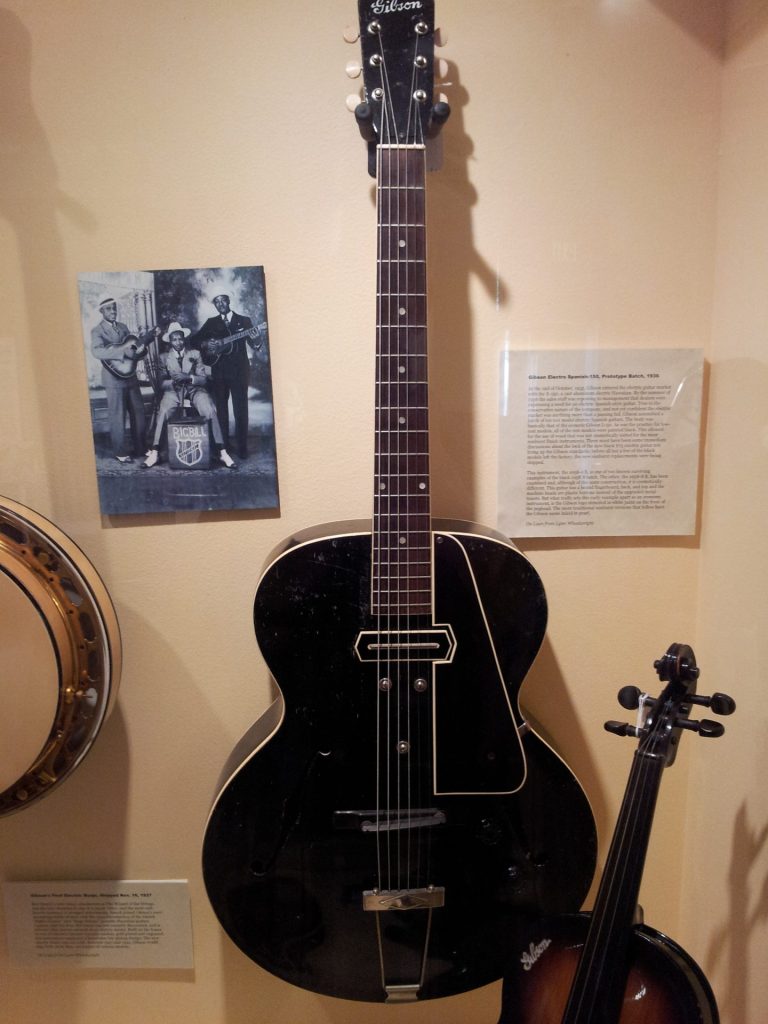
Gibson’s entry into electric guitars came in 1936 with the ES-150 (Electric Spanish), which became the first widely successful electric guitar. Priced at $150 – expensive for the time – the ES-150 featured a single-coil pickup designed by Walt Fuller.
The guitar became famous through jazz guitarist Charlie Christian’s revolutionary playing with Benny Goodman’s band from 1939-1941. Christian demonstrated the electric guitar’s potential as both a rhythm and lead instrument, with his amplified single-note lines cutting through big band arrangements and establishing the electric guitar as a legitimate solo instrument.
Historical Impact: The pickup used in the ES-150 became so associated with Christian that it’s still known as the “Charlie Christian pickup” among collectors today.
Leo Fender’s Early Manufacturing Innovations
Before becoming famous for the Telecaster and Stratocaster, Leo Fender was already experimenting with electric guitars and amplifiers in the 1940s. His company, K&F Manufacturing (later Fender Electric Instruments), produced lap steel guitars and amplifiers with innovative features:
- Feedback-resistant design principles
- Improved output transformers
- Manufacturing-focused construction methods
- Emphasis on reliability and repairability
Fender’s engineering background led him to approach guitar design from a manufacturing perspective, emphasizing consistency and functionality over traditional craftsmanship aesthetics.
Paul Bigsby and the First Modern Solid-Body (1948)
Guitar builder Paul Bigsby created what many consider the first modern solid-body electric guitar in 1948 for country musician Merle Travis. This instrument featured:
- Solid maple body for enhanced sustain
- Single-cutaway design for upper fret access
- Six-on-a-side headstock that influenced later designs
- Revolutionary vibrato tailpiece (still popular today)
While Bigsby’s guitars were handcrafted rather than mass-produced, they demonstrated the viability of solid-body construction for reducing feedback and increasing sustain.
The Foundation Years: 1950s Revolution
The 1950s marked the true birth of the modern electric guitar, with iconic instruments setting standards that continue today. This decade established the fundamental designs and sounds that define electric guitars across all genres.
The Fender Telecaster: Solid-Body Innovation (1950)
The Fender Telecaster, introduced in 1950 as the Broadcaster, represented a radical departure from traditional guitar construction. Its revolutionary features included:
Construction Innovations:
- Solid ash or alder body for maximum sustain
- Bolt-on maple neck for easy repair and replacement
- Two single-coil pickup configuration
- Three-way selector switch for tonal versatility
The Telecaster’s utilitarian design philosophy proved that function could be beautiful, establishing a new aesthetic that emphasized clean lines and purposeful design. Its bright, cutting tone would define country, rock, and blues music for decades.
The Gibson Les Paul: Traditional Meets Innovation (1952)
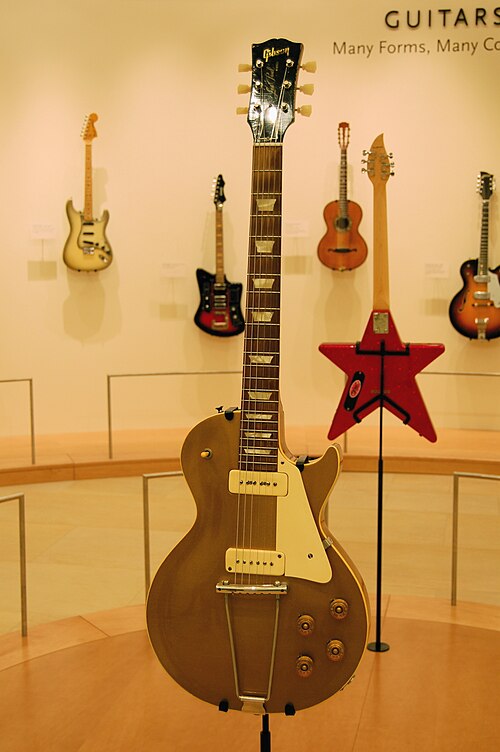
Gibson responded to Fender’s solid-body success with the Les Paul model in 1952, representing a more traditional approach:
Design Features:
- Mahogany body with figured maple cap
- Set-neck construction for enhanced sustain
- Carved arched top for aesthetic appeal
- Introduction of humbucking pickups (1957)
The Les Paul’s warm, full tone and natural compression made it ideal for blues and rock playing, establishing the fundamental sonic dichotomy between Gibson and Fender that persists today.
The Fender Stratocaster: The Ultimate Evolution (1954)
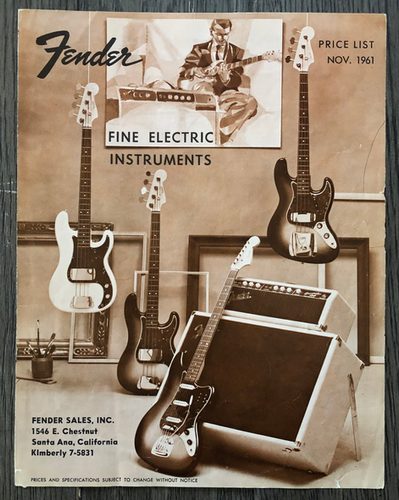
The Stratocaster, introduced in 1954, represented Leo Fender’s refinement of the solid-body concept:
Revolutionary Features:
- Double-cutaway body for complete fret access
- Three-pickup configuration with five-way switching
- Synchronized tremolo system for pitch bending
- Contoured body for enhanced comfort
- Balanced design for rhythm and lead playing
The Stratocaster’s bright, articulate tone and responsive tremolo system made it the preferred choice for surf music, blues, and rock and roll.
Amplifier Development: Completing the System
The 1950s also saw crucial developments in guitar amplification:
- Fender Twin and Bassman amplifiers established clean, powerful sounds
- Complete system approach – manufacturers developed guitars and amps together
- Tube technology refinement improved reliability and tone quality
- Speaker innovations enhanced frequency response and power handling
The British Invasion: 1960s Expansion
The 1960s witnessed the electric guitar’s transformation from specialized tool to the defining instrument of popular music. British musicians took American-made guitars and pushed them into entirely new sonic territories.
British Musicians Redefine American Guitars

Key Players and Their Impact:
Eric Clapton showcased the sustain and feedback capabilities of solid-body guitars through high-powered amplification, particularly during his time with Cream.
Jimmy Page explored the guitar’s textural possibilities with Led Zeppelin, using innovative studio techniques and unconventional playing methods.
Jeff Beck demonstrated the instrument’s potential for both delicate expression and overwhelming power, pushing technical boundaries.
These British players often modified their American guitars, replacing pickups, modifying electronics, and using instruments in ways their designers never intended.
Marshall Amplification: The Sound of Rock
The development of Marshall amplifiers in Britain created the archetypal rock guitar sound:
- Powerful, aggressive tone capable of natural overdrive
- High-gain characteristics perfect for rock and blues
- Manageable stage volumes with maximum impact
- Thick, saturated distortion that defined hard rock
Jim Marshall’s amplifiers, initially based on Fender circuits but modified for British preferences, produced the controlled feedback and sustain that became essential elements of rock guitar technique.
Effects Pedals Expand Sonic Possibilities
The 1960s introduced revolutionary guitar effects pedals:
Maestro Fuzz-Tone – Created the distorted sound heard on Rolling Stones’ “Satisfaction”
Vox Wah-Wah Pedal – Allowed expressive tone shaping popularized by Hendrix and Clapton
Dallas Arbiter Fuzz Face – Delivered the smooth, singing sustain favored by blues players
These early effects established key principles:
- Electronic processing should enhance, not replace natural guitar tone
- Effects should respond to playing dynamics
- Simplicity often produces the most musical results
Manufacturer Innovation Response
Guitar manufacturers responded with numerous innovations:
Fender Additions:
- Jazzmaster and Jaguar models with offset body shapes
- Unique tremolo systems for surf and alternative rock
- Expanded color options and aesthetic variations
Gibson Developments:
- SG series offering lighter weight and enhanced access
- Improved pickup designs for higher output
- Better hardware for professional performance demands
The Heavy Era: 1970s Power and Complexity
The 1970s brought unprecedented diversity to electric guitar design. Hard rock and heavy metal demanded instruments capable of producing massive, sustained tones, leading to innovations that would define rock guitar for decades.
The Rise of Guitar Virtuosity
Guitar virtuosity became a driving force in popular music:
Eddie Van Halen – Modified Stratocasters with Gibson humbuckers and Floyd Rose tremolo systems
Ritchie Blackmore – Pushed Stratocasters through Marshall stacks for unprecedented sustain
Tony Iommi – Created the heavy, dark tones that defined metal guitar
These players’ innovations in technique often drove technological advancement, with manufacturers scrambling to meet the demands of increasingly sophisticated musicians.
High-Output Pickups and Active Electronics
The demand for aggressive sounds led to pickup technology breakthroughs:
Aftermarket Pickup Companies:
- DiMarzio – High-output humbuckers designed for heavy rock
- Seymour Duncan – Custom-wound pickups for specific applications
- Lawrence – Advanced magnetic designs for enhanced harmonics
Active Electronics Introduction:
- Alembic pioneered battery-powered preamp systems
- Consistent output levels regardless of pickup height
- Enhanced frequency response and reduced noise
- Greater control over tone shaping
Boutique Manufacturers Enter the Market
The 1970s saw significant growth in boutique guitar manufacturing:
Notable Builders:
- Alembic – Exotic woods and active electronics
- Travis Bean – Aluminum neck construction
- Earthwood – Acoustic/electric hybrid designs
- James D’Aquisto – Advanced hollow-body electric designs
These builders served as testing grounds for innovations later adopted by major manufacturers.
International Competition Emerges
Japanese manufacturers began challenging American dominance:
Leading Japanese Brands:
- Yamaha – High-quality construction and innovative features
- Ibanez – Aggressive designs for rock and metal players
- Aria – Affordable alternatives with professional features
- Greco – Accurate recreations of American classics
This competition forced American manufacturers to improve quality control and reconsider pricing strategies, ultimately benefiting players worldwide.
The MTV Generation: 1980s Technology and Style
The 1980s represented a perfect storm of technological advancement, musical innovation, and visual presentation. The decade’s emphasis on image demanded instruments that looked spectacular under stage lights and television cameras.
The Superstrat Revolution
The 1980s represented a perfect storm of technological advancement, musical innovation, and visual presentation that pushed electric guitar development in entirely new directions. The decade’s emphasis on image and production values demanded instruments that not only sounded good but looked spectacular under stage lights and television cameras.
Superstrat designs dominated the decade, featuring hot-rodded specifications like high-output pickups, locking tremolo systems, and fast-playing neck profiles. Companies like Jackson, Charvel, and ESP built reputations on instruments designed specifically for the technical demands of 1980s metal and rock. These guitars prioritized playability and sustain over traditional tonal characteristics.
Digital technology began making its first significant impacts on guitar design during this period. Roland’s guitar synthesizers allowed electric guitars to trigger complex keyboard sounds, while companies like Casio experimented with entirely digital guitars. Though these early attempts had limited success, they established principles that would prove important in later developments.
The decade also saw the introduction of active electronics in mainstream guitar design. EMG pickups became standard equipment on many high-end guitars, providing consistent output levels and reduced noise that worked particularly well with the high-gain amplification popular in 1980s music. These electronic systems required fundamental changes in guitar wiring and shielding.
Manufacturing technology advanced significantly during the 1980s, with computer-controlled routing machines and precision measuring equipment allowing for more consistent quality control and tighter tolerances. These improvements particularly benefited budget and mid-range instruments, raising the overall standard of guitar manufacturing worldwide.
The emergence of MTV as a cultural force also influenced guitar design, with manufacturers paying increased attention to visual appeal and stage presence. Radical body shapes, exotic finishes, and dramatic hardware became important selling points as guitars became visual icons as much as musical instruments.
Floyd Rose Locking Tremolo Revolution
The Floyd Rose locking tremolo system revolutionized pitch bending:
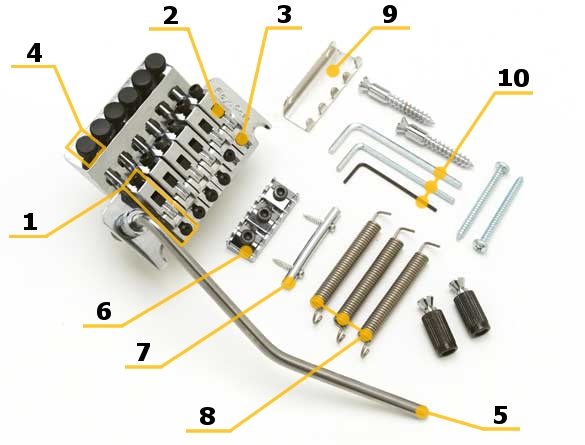
Technical Innovations:
- Dive bombs and flutter effects previously impossible
- Extreme pitch bends without going out of tune
- Changed string installation procedures
- Fine tuners at the bridge for precise adjustment
Digital Technology Integration
Digital technology began impacting guitar design:
Early Digital Innovations:
- Roland Guitar Synthesizers – Guitars triggering keyboard sounds
- Casio Digital Guitars – Entirely electronic string instruments
- Digital Multi-Effects – Rack-mounted processing systems
- MIDI Integration – Guitars controlling external synthesizers
While early attempts had limited success, they established principles crucial for future developments.
Active Electronics Mainstream Adoption
EMG Pickups became standard on many high-end guitars:
Benefits:
- Consistent output levels
- Reduced electromagnetic interference
- Enhanced frequency response
- Better signal-to-noise ratio
Industry Impact:
- Required changes in wiring and shielding
- Battery compartments became standard
- Influenced manufacturing processes industry-wide
- Established acceptance of electronic solutions
Alternative Innovations: 1990s Diversity
The 1990s witnessed a dramatic shift away from the technical virtuosity and flashy appearance of 1980s guitar culture. Grunge and alternative rock movements embraced simpler, more direct approaches to guitar playing that emphasized emotion and authenticity over technical prowess. This cultural shift profoundly influenced guitar development throughout the decade.
Vintage instruments experienced a massive resurgence in popularity as musicians sought the perceived authenticity of older designs. This trend drove significant improvements in reissue models, with manufacturers investing heavily in researching historical specifications and construction techniques. Companies like Fender and Gibson introduced increasingly accurate vintage reproductions that satisfied demand for classic sounds and aesthetics.
The boutique guitar market expanded dramatically during this period, with small builders gaining recognition for innovative designs and superior craftsmanship. Companies like Paul Reed Smith, Suhr, and Anderson Guitars demonstrated that small manufacturers could compete effectively with established brands by focusing on quality and customer service.
Seven-string guitars gained mainstream acceptance during the 1990s, largely through the influence of metal bands seeking extended range capabilities. Ibanez’s Universe series helped establish seven-strings as legitimate instruments rather than experimental curiosities, leading to broader adoption across various musical styles.
Electronic innovations continued throughout the decade, with companies like Line 6 introducing digital modeling technology that could simulate the sounds of classic amplifiers and effects. While early modeling systems had limitations, they established the foundation for revolutionary developments in the following decade.
The 1990s also saw increased attention to ergonomic considerations in guitar design. Manufacturers began studying how body shapes, neck profiles, and hardware placement affected player comfort and performance. These investigations led to subtle but important improvements in instrument playability and reduced performance-related injuries.
Digital Revolution: 2000s Modeling and Connectivity
The 2000s brought the most fundamental changes to electric guitar technology since the instrument’s invention. Digital modeling matured dramatically, while USB connectivity revolutionized home recording practices.
Advanced Modeling Technology
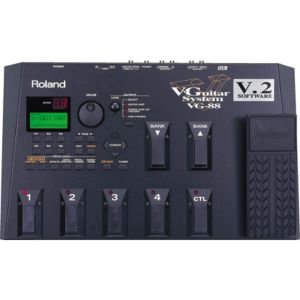
Leading Products:
- Line 6 POD XT – Expanded modeling with USB connectivity
- Roland VG-88 – Advanced guitar-to-MIDI processing
- Yamaha MagicStomp – High-quality effects in compact format
- TC Electronic G-System – Professional rack-mounted processing
Technical Improvements:
- Higher sampling rates and bit depths
- More accurate algorithm development
- Reduced latency for real-time performance
- Better analog-to-digital conversion
The 2000s brought the most fundamental changes to electric guitar technology since the instrument’s invention. Digital modeling technology matured dramatically, with companies like Line 6, Roland, and Yamaha producing systems that could convincingly simulate vintage amplifiers, effects, and even different guitar types. These advances democratized access to professional-quality sounds that were previously available only through expensive vintage equipment.
USB connectivity became standard on many guitar-related products, allowing direct connection to computers for recording and sound processing. This development fundamentally changed home recording practices and enabled bedroom producers to achieve professional-sounding results with minimal equipment investment.
The emergence of digital audio workstations (DAWs) and computer-based recording created new demands for guitar technology. Instruments needed to interface cleanly with digital systems while maintaining their essential analog character. This requirement drove innovations in pickup design, electronics, and output systems.
Modeling guitars like the Line 6 Variax series attempted to recreate multiple guitar types within a single instrument using digital processing. While these early attempts had mixed success, they demonstrated the potential for fundamental changes in how guitars generate and process sound.
The 2000s also witnessed significant improvements in traditional guitar construction, as computer-aided design and advanced materials science enhanced both manufacturing precision and tonal possibilities. CNC machinery enabled complex body shapes and precise neck carving that would have been impossible or prohibitively expensive using traditional methods.
International manufacturing continued expanding during this decade, with Chinese and Korean manufacturers producing increasingly sophisticated instruments. These manufacturers challenged traditional assumptions about geographic centers of guitar production, forcing established companies to compete on value and innovation rather than reputation alone.
Modern Innovations: 2010s Hybrid Technologies
The 2010s represented a period of remarkable innovation as manufacturers successfully integrated digital and analog technologies. Hybrid instruments combining traditional magnetic pickups with advanced electronics offered unprecedented versatility while maintaining familiar playing characteristics.
Companies like Fishman developed sophisticated pickup systems that could blend magnetic and acoustic properties, enabling electric guitars to produce convincing acoustic sounds alongside traditional electric tones. These systems used advanced signal processing to overcome the limitations of purely analog approaches.
The rise of social media and online music sharing created new demands for guitar technology. Instruments needed to work effectively with smartphone recording apps and streaming platforms, leading to improved direct-output systems and smartphone compatibility features.
Extended-range instruments gained widespread acceptance during this decade, with eight and nine-string guitars becoming common in progressive metal and experimental music. Manufacturers developed new pickup configurations, string tension systems, and ergonomic solutions to accommodate these expanded ranges effectively.
The boutique market continued expanding, with small builders using modern technology to compete effectively with major manufacturers. CNC machinery and internet marketing enabled skilled craftspeople to reach global markets while maintaining traditional handcrafted quality standards.
Environmental consciousness also began influencing guitar manufacturing during the 2010s. Companies started using sustainable woods, eco-friendly finishes, and recycled materials in response to both regulatory requirements and consumer demand for environmentally responsible products.
Contemporary Trends: 2020s and Beyond
The 2020s brought unprecedented challenges and opportunities. The COVID-19 pandemic increased home music-making while forcing manufacturers to adapt to supply chain disruptions and changing consumer behavior.
AI and Machine Learning Integration
Artificial intelligence began influencing guitar technology:
Neural DSP Innovations:
- Machine learning-based amp modeling
- Realistic cabinet simulation algorithms
- Adaptive processing based on playing style
- Cloud-based model updates and sharing
BOSS WAZA-AIR Headphones:
- Spatial audio for immersive practice
- Gyroscopic sensors for movement-based effects
- Wireless connectivity with sophisticated processing
- AI-enhanced tone shaping
Smart Practice Tools:
- Yousician AI feedback – Real-time playing analysis
- SmartMusic – Intelligent accompaniment systems
- Flowkey integration – Adaptive lesson difficulty
- AI-powered transcription – Automatic tablature generation
Wireless Revolution
Wireless technology reached professional standards:
Advanced Wireless Systems:
- Line 6 Relay G75 – Professional wireless with modeling
- Boss WL-20 – Compact, reliable wireless transmission
- Xvive U2 – Affordable professional wireless
- Shure GLX-D – Digital wireless with extended range
Benefits:
- Eliminated cable-related reliability issues
- Enhanced stage movement and performance freedom
- Reduced setup complexity for live performance
- Integration with digital modeling systems
Sustainable Manufacturing
Environmental consciousness drove innovation:
Alternative Materials:
- Richlite – Paper-based composite fretboards
- Carbon fiber – Lightweight, stable neck construction
- Reclaimed woods – Vintage character with sustainability
- Bio-based plastics – Reduced environmental impact
Manufacturing Processes:
- Solar-powered factory operations
- Water-based finishing systems
- Waste reduction and recycling programs
- Local sourcing to minimize transportation
Direct-to-Consumer Sales
E-commerce transformed guitar retail:
Online Sales Growth:
- COVID-19 impact – Massive increase in online purchases
- Try-before-buy programs – Risk-free online purchasing
- Virtual consultations – Expert advice remotely
- Social media marketing – Direct manufacturer-to-customer relationships
Customization Options:
- Online configurators – Custom guitar building tools
- 3D visualization – See instruments before purchasing
- Modular designs – User-replaceable components
- Personal consultation – One-on-one expert guidance
Looking Forward: The Future of Electric Guitar
As we look toward the future, several trends suggest continued evolution in electric guitar design and technology. Wireless connectivity will likely become universal, eliminating cables and enabling new forms of musical interaction and collaboration. Advanced materials science may produce instruments that surpass traditional woods in both acoustic properties and environmental sustainability.
Artificial intelligence integration will probably expand beyond current applications, potentially offering real-time playing assistance, automatic accompaniment generation, and personalized sound optimization based on individual playing styles and preferences. However, these technological advances will likely complement rather than replace the fundamental human elements that make the electric guitar such a compelling instrument.
The challenge for future guitar development lies in balancing innovation with tradition, ensuring that technological advances enhance rather than diminish the essential qualities that have made the electric guitar central to popular music for over seven decades.
Conclusion: A Living, Evolving Instrument
The electric guitar’s evolution from the 1930s to today demonstrates remarkable adaptability and continuous innovation. Each decade brought unique challenges that drove development while preserving essential characteristics that define the instrument.
From George Beauchamp’s “Frying Pan” to today’s AI-enhanced instruments, the electric guitar has consistently embraced new technologies while maintaining its core identity as an expressive, accessible, and infinitely versatile musical tool.
Key Takeaways:
Historical Lessons:
- Innovation often comes from players pushing instruments beyond intended limits
- The best technologies enhance rather than replace human expression
- Market competition drives quality improvements and accessibility
- Cultural movements significantly influence instrument development
Modern Reality:
- Today’s guitars represent accumulated wisdom from 90+ years of development
- Quality instruments are available at every price point
- Technology should serve musicality, not overshadow it
- The future promises even more exciting possibilities
Whether you’re interested in vintage-style instruments that capture classic tones or modern guitars that push technological boundaries, understanding this evolution helps inform better purchasing decisions and deeper appreciation for the instrument’s remarkable journey.
The electric guitar’s story continues to unfold, with each new generation of players and builders contributing to its ongoing evolution. As we look toward the future, one thing remains certain: the electric guitar will continue adapting and inspiring, just as it has for nearly a century.
Related Articles:
- Best Electric Guitars for Every Budget and Style
- Customizing Your Instrument: the Best Guitar Pickups
- Essential Guitar Effects Pedals Guide
- The Most Interesting Famous Guitars Ever Made: Legendary Instruments That Shaped Music History