If your guitar practice routine looks great on paper but falls apart in real life, you are not lazy.
Your brain is just wired differently.
Most traditional practice advice assumes you can sit still for 60 minutes, grind scales, and politely ignore every shiny distraction your brain throws at you.
For many players, especially those with busy or easily distracted minds, that approach collapses fast.
The good news is this: you do not need hour-long practice sessions to improve.
You need the right structure.
This is the 15 minute guitar practice that actually works when focus is limited and motivation comes and goes.
Why Traditional Practice Plans Fail Distracted Players
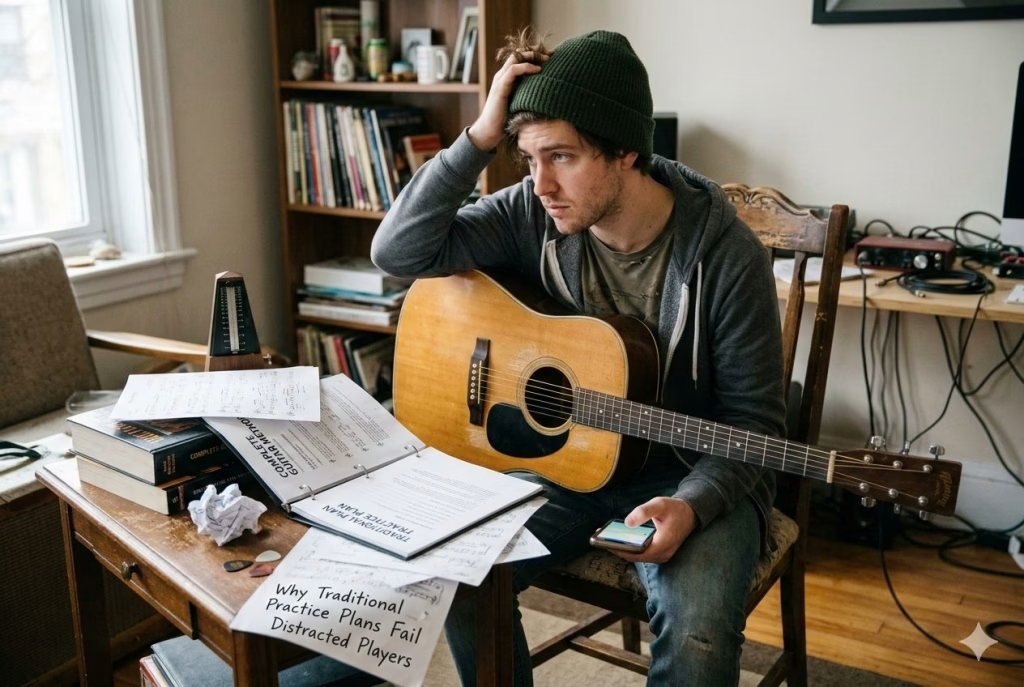
Typical advice sounds like this:
- Practice scales for 20 minutes
- Work on chords for 20 minutes
- Learn a song for 20 minutes
In reality, distracted brains tend to:
- Lose focus quickly
- Get bored with repetition
- Jump between tasks
- Avoid starting when the session feels too big
The result? Guilt, inconsistency, and a guitar gathering dust.
Short, structured bursts work better because they:
- Lower the resistance to starting
- Create quick wins
- Keep dopamine flowing
- Build consistency instead of burnout
Think of it less like a marathon and more like focused musical sprints.
The 15 Minute Practice Framework

Set a timer for 15 minutes. Not “about 15.”
Not until you feel done. Hard stop at 15.
Here is the structure:
Minute 0 to 2: Warm Up the Hands
Keep this simple and physical.
Options:
- Chromatic run (1-2-3-4 on each string)
- Slow open chord changes
- Light finger stretching
Goal: wake up your fingers and signal to your brain that practice has started.
Do not overthink this part.
Minute 2 to 7: One Micro Skill
Pick one tiny thing to improve. Not five.
Good examples:
- Clean chord transitions between two chords
- Strumming consistency
- Muting unused strings
- Barre chord pressure
- Timing with a metronome
Bad examples:
- “Get better at guitar”
- “Work on theory”
- “Practice everything”
Laser focus wins here.
👉 Pro tip: If you feel bored, you picked something too big or too vague.
Metronomes for Practice. Our Top Picks
If your timing improves, everything improves. Even five minutes a day with a metronome builds rock-solid rhythm.
Minute 7 to 12: Real Music Application
Now plug that skill into something musical.
Options:
- Play part of a song using the skill
- Loop a chord progression
- Practice a riff slowly
- Play along with a backing track
This step is crucial. Without it, practice feels abstract and motivation drops.
Your brain needs to feel: “I am actually playing music.”
Minute 12 to 15: The Win Lap
This is the secret sauce most players skip.
End every session by playing something you already enjoy.
Examples:
- Your favourite riff
- A song you can mostly play
- A fun chord progression
- Improvising freely
Why this matters:
Your brain remembers the emotional ending of the session. If practice always ends in struggle, your motivation slowly dies.
If it ends with a win, your brain is far more likely to come back tomorrow.
The Rules That Make This Work

This system only works if you respect the guardrails.
Rule 1: Stop at 15 minutes
You are allowed to keep playing for fun afterwards, but the structured practice ends at 15.
This keeps the routine psychologically easy to start tomorrow.
Rule 2: One focus per session
Scattered practice creates scattered results.
Write your micro goal down before you start.
Rule 3: Consistency beats intensity
Five focused 15 minute sessions per week will beat one heroic 2 hour grind session almost every time.
Boring truth. Powerful results.
What Results to Expect (Realistically)
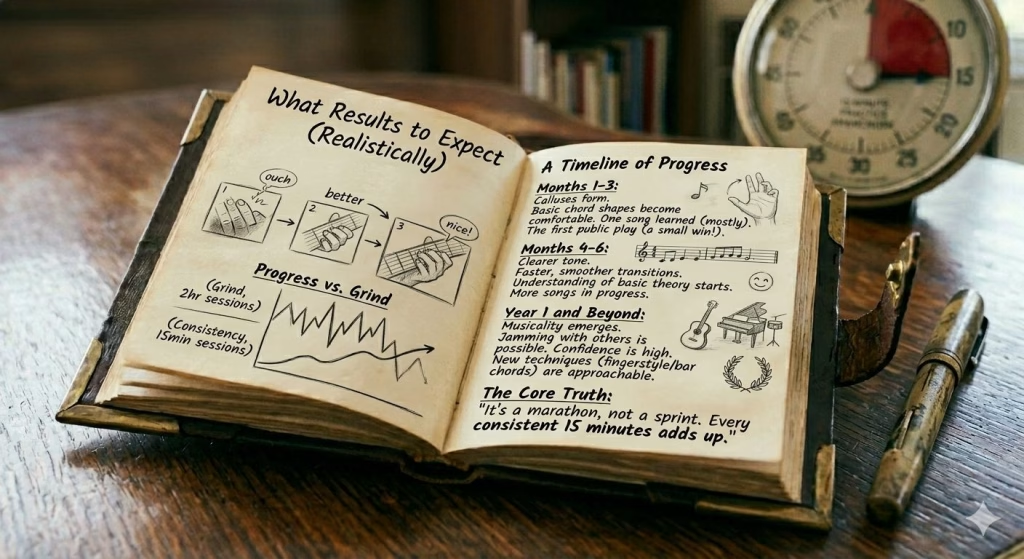
If you follow this consistently for 30 days, most players notice:
- Cleaner chord changes
- Better timing
- Less frustration when practicing
- More frequent playing overall
- Faster visible progress
The biggest shift is not technical. It is psychological.
Practice stops feeling like homework and starts feeling manageable again.
Finger Strength & Comfort Helpers
Tools to help with building your finger strength and dexterity.
Smart picks:
- FENDER Patented Callus Builder & Finger Strengthener
- Guitar Chord Trainer Practice Tool
- Vive Finger Exerciser Strengthener
Your 15 Minute Challenge
Try this for the next 7 days:
- Set a daily 15 minute timer
- Follow the structure
- Track your streak
That is it. No perfection required.
If your brain tends to wander, resist structure, or get overwhelmed by long practice sessions, this approach may fit you far better than traditional routines.
Small sessions. Clear focus. Repeat often.
That is how momentum quietly builds. Good Luck, and let us know how you got on !